Best Motorcycle Dash Cam: RoadPupil R9 vs Basic Models (2026 Comparison Guide)
If you’ve ever ridden in traffic long enough, you probably already know one thing:
It’s not always about how you ride—it’s about what you can prove happened.
That’s the real reason more riders are installing dash cams.

To be honest, when people search for the best motorcycle dash cam, what they really want isn’t just specs—it’s something that actually works when you’re out riding every day.
But here’s where most people get stuck:
👉 Should you just buy a cheap basic dash cam?
👉 Or is something like the RoadPupil R9 actually worth it?
I’ve used both types. And honestly, the difference is bigger than I expected.
👉 Best Motorcycle Dash Cam for Everyday Riders: What Really Matters
The truth is, there’s no single “perfect” dash cam—but for most riders, the best motorcycle dash cam is the one that balances reliability, video quality, and real riding safety.
Some riders just need basic recording, while others need something like the RoadPupil R9 that can handle daily commuting and unpredictable traffic situations.
🧩 What a Basic Motorcycle Dash Cam Really Looks Like
Let’s be real here—“basic” dash cams are everywhere now.
Most of them promise “1080p recording” and “easy installation,” but in actual use, they usually look like this:
- Front camera only
- Limited image clarity at night
- No real app experience
- Manual SD card checking
- Basic loop recording with no smart features
And yes, they do record.
But they feel more like a backup recorder, not something you’d rely on in a real incident.
👉 The biggest issue isn’t that they don’t work—it’s that they don’t help much when things actually go wrong.
⚖️ RoadPupil R9 vs Basic Dash Cam – Real-World Differences
best motorcycle dash cam comparison between R9 and basic models, Instead of just specs, let’s talk about what actually matters when you’re riding.
📊 Side-by-Side Comparison

| Feature | Basic Dash Cam | RoadPupil R9 |
|---|---|---|
| Camera Setup | Front only | Front + Rear dual recording |
| Video Quality | Basic 1080p (varies a lot) | 1080p Full HD optimized for road clarity |
| Night Riding | Often grainy / unclear | Strong low-light performance (Sony sensor-based system) |
| GPS Tracking | ❌ No | ✅ Built-in GPS with speed data |
| App / WiFi Access | ❌ Usually none | ✅ Mobile app + WiFi access |
| Parking Protection | Rare or weak | Motion + impact detection support |
| Evidence Reliability | Low consistency | Designed for incident evidence |
| Real Riding Use | Casual recording | Daily commuting + long ride safety |
🎥 What Makes the R9 Feel Different in Real Use
According to RoadPupil R9’s design, it’s not just built to “record video.”
It’s built around how riders actually use footage later.
Here’s what stands out in real riding situations:
🔍 1. Front + Rear Coverage Changes Everything
Most riders don’t realize this until they need it:
👉 A huge number of road incidents don’t happen in front of you.
- Rear-end close calls
- Lane-change conflicts
- Blind spot situations
The R9’s dual-camera setup means you’re not guessing anymore—you’re actually covered.

📡 2. GPS Isn’t Just a Feature
With basic cams, you only have video.
With the R9, you also get:
- Location data
- Speed tracking
- Ride history context
👉 When something happens, context matters as much as footage.
🌙 3. Night Riding Is Where Cheap Cameras Fail
This is where the gap really shows.
Basic dash cams often struggle with:
- Headlight glare
- Dark roads
- Motion blur at speed
The R9 uses a higher-quality imaging system (Sony sensor-based architecture) designed to handle low light more consistently.
👉 In simple terms:
You don’t just get video—you get usable video.
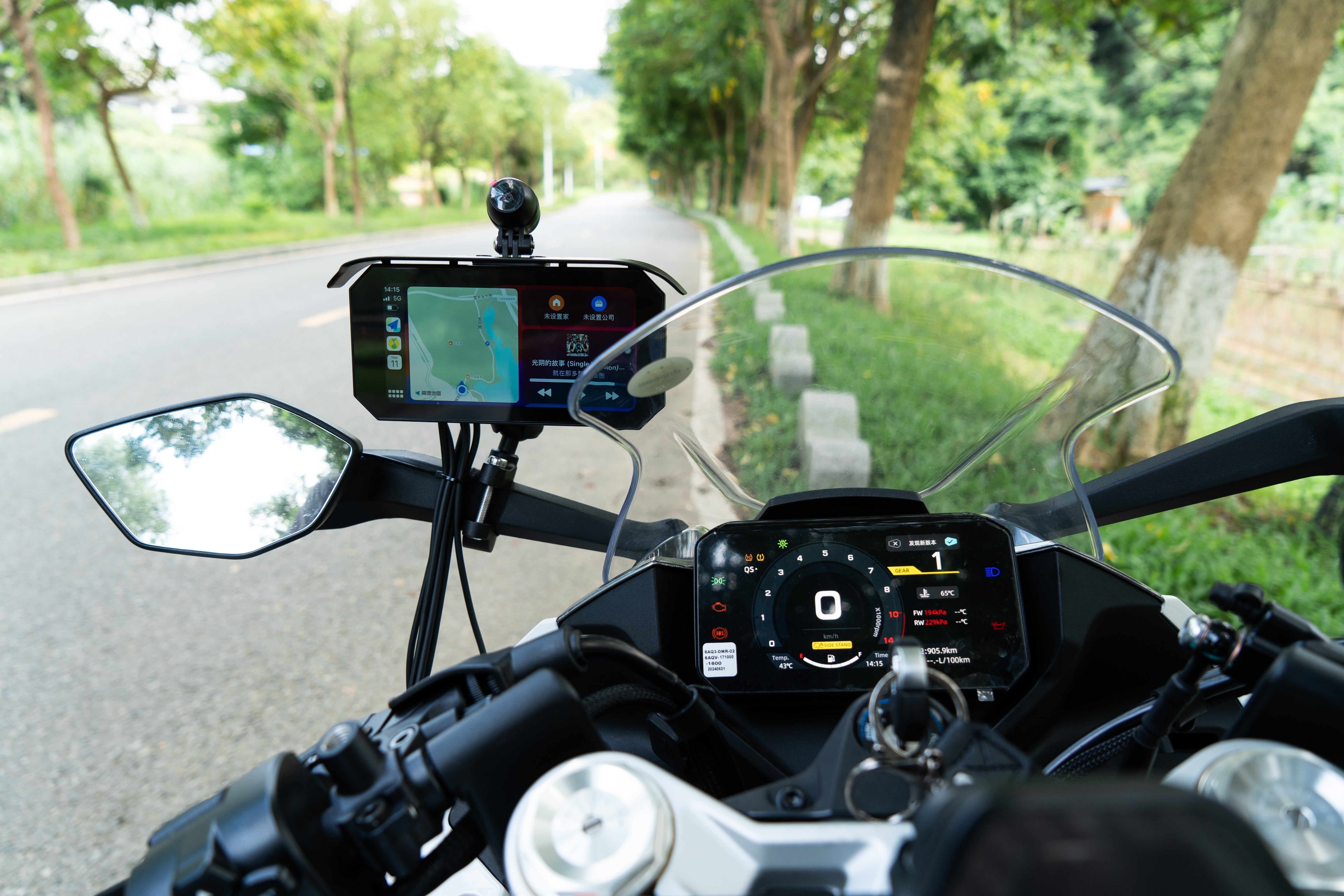
4. Tire Pressure Detection (TPMS) – A Feature Most Riders Don’t Expect, But Quickly Rely On
One thing I didn’t think much about at first was tire pressure.
Most riders, honestly, don’t.
You usually just check it before a ride and hope everything stays fine.
But after using the RoadPupil R9 for a while, the tire pressure detection feature started to feel… surprisingly useful.

Motorcycle Tire Pressure Monitoring (TPMS): A Small Feature That Changes Everything
If you’ve never looked into it before, tire pressure monitoring systems (TPMS) are becoming a big part of modern motorcycle safety setups.
It quietly keeps an eye on your tire pressure while you ride, so you’re not relying purely on guesswork or memory anymore.
And once you get used to it, it becomes one of those things you don’t want to ride without.
Because tire pressure isn’t just a “maintenance detail” — it actually affects how the bike feels on the road:
- Braking feels different when pressure is off
- Cornering stability changes more than you think
- Long rides become less predictable if something slowly goes wrong
Most basic dash cams don’t go anywhere near this level. They stop at recording footage.
But the R9 starts to feel more like a riding companion system, not just a camera stuck on your handlebars.
It’s not flashy, but it’s the kind of feature that quietly adds confidence every time you ride.
📱 5. App Experience Actually Matters More Than You Think
Nobody talks about this enough.
With cheap dash cams:
- Pull SD card
- Plug into computer
- Hope file isn’t corrupted
With R9:
- Connect via app
- View footage instantly
- Save/share directly from phone
👉 That alone changes how often people actually use their dash cam.
🧠 So Which One Should You Actually Get?
Let’s keep it simple.
✔ Choose a Basic Dash Cam if:
- You rarely ride in traffic
- You just want “something recording”
- Budget is the only priority
✔ Choose RoadPupil R9 if:
- You ride daily or commute
- You care about accident protection
- You want reliable evidence, not just footage
- You prefer a system that “just works”
💡 Is a Motorcycle Dash Cam Actually Worth It?
Honestly?
👉 Yes—but only if it’s reliable enough to trust.
Because a dash cam that fails when you need it… isn’t really protection.
It’s just footage.
That’s the real difference between basic systems and something like the R9.
If you're still unsure, you can find more real-world riding insights and gear breakdowns in our latest motorcycle blog posts.
🔗 If You Want to Go Deeper for riders
If you’re still figuring out what actually matters when choosing one, this complete motorcycle dash cam buying guide for riders breaks it down in a much more practical way.
If you want to see how all these features come together in real use, you can explore the full RoadPupil R9 motorcycle dash cam with real riding features here.
🏁 Final Thought
A basic dash cam is like “having a camera.”
The RoadPupil R9 is closer to having a riding safety system that happens to record video.
And depending on how often you ride—that difference matters a lot more than specs on paper.
And if you’re trying to find the best motorcycle dash cam for real-world riding—not just specs on paper—the R9 is definitely worth a closer look.
❓ Motorcycle Dash Cam FAQs: Real Questions Riders Ask
Motorcycle Dash Cam FAQ
⬤ Q: Is a basic motorcycle dash cam enough for daily riding?
A: It can record footage, but it’s often inconsistent in real-world conditions like night riding or fast traffic.
⬤ Q: What makes RoadPupil R9 different from cheap dash cams?
A: The biggest difference is reliability—dual camera coverage, GPS data, and more stable recording in real riding conditions.
⬤ Q: Do I really need a dual camera dash cam?
A: If you ride in traffic or highways, yes. Rear situations are more common than most riders think.
⬤ Q: Are motorcycle dash cams worth it overall?
A: Yes—especially for commuters. They’re less about recording rides and more about protecting yourself when things go wrong.
Keep Riding Smarter

Written by roadpupil