Are Motorcycle Dash Cams Really Waterproof? How to Choose a Camera That Survives Real Riding
If you ride often enough, bad weather is going to catch you sooner or later. Sometimes it’s a sudden downpour on the highway, other times it’s hours of mist, mud, and spray on a weekend ride.
And if you’ve ever done trail riding, you already know how brutal it gets — that’s exactly why riders who use waterproof cameras for dirt biking pay so much attention to sealing and durability. Rain is one thing, but mud and constant splashes are on a different level.
That’s why so many riders ask the same question: are motorcycle dash cams actually waterproof, or do they just claim to be?
If you're looking for a waterproof dash cam for motorcycle use, that question becomes even more important — because not every system is built for real exposure.
Choosing the right camera for motorcycle riding isn’t just about how sharp the footage looks. What really matters is whether it keeps working when the weather turns bad — because that’s usually when you need it most.
In this guide, we’ll break down what waterproof really means in the real world, where most motorcycle camera systems fail, and how to choose a setup that keeps recording through rain, splashes, and long-distance touring.
We’ll also compare different options—from bike-mounted dash cams to helmet cams—so you can decide what actually fits your riding style, not just the spec sheet.
Quick answer:
Most motorcycle dash cams are water-resistant, not truly waterproof across the entire system. A reliable waterproof dash cam for motorcycle riding usually depends on sealed wiring, proper installation, and consistent real-world performance — not just the IP rating.
Why Waterproofing Matters for Any Camera for Motorcycle
Motorcycles expose electronics to conditions cars simply don’t deal with. That’s also why riders looking at waterproof cameras for dirt biking tend to be extra picky — off-road riding pushes gear way harder than normal street use.
A camera on motorbike sits in open air—direct rain, road spray, dust, vibration, and constant temperature changes.
Even a short ride in heavy rain can push water into seams, buttons, or cable joints if the design isn’t solid. Unlike car dash cams that hide behind a windshield, a biker dash cam takes full impact at speed.
Over time, moisture intrusion leads to foggy lenses, unstable recordings, corroded internal boards, and sudden shutdowns—often without warning.
If you’re curious why some setups last for years while others fail after a few wet rides, this guide on motorcycle dash cam systems built for real riding explains the difference.
Are waterproof dash cams for motorcycles really waterproof — or just water-resistant?
Many products claim to be “waterproof,” but that word doesn’t mean the same thing across brands. In most cases, the difference comes down to IP ratings—and how honestly they’re applied.
Common ratings you’ll see on motorcycle cameras include:
IP65 – Resistant to light rain and splashes, but not ideal for long rides in heavy rain
IP67 – Can handle sustained rainfall and brief submersion
IP68 – Built for continuous exposure to water and harsh environments
The catch? Some camera motorbike systems protect the lens housing but leave cables or control modules only splash-resistant. That mismatch is one of the most common reasons riders experience failures after a few months.
Weak Points That Decide Waterproof Performance on a Camera on Motorbike
Even high-quality cameras can fail at their weakest points.
One of the most overlooked issues is the mounting area—especially screw holes without proper gaskets.
Common water-entry points include:
-
Mounting screws without rubber seals
-
Poorly sealed cable exits
-
Exposed connectors near the engine or frame
-
Installation angles that allow water to pool instead of drain
Water usually enters slowly. After repeated wet rides, moisture builds up inside the housing, quietly damaging components until one day the camera simply stops working.

Motorcycle-Mounted Camera vs Helmet Cam in Rainy Conditions
Helmet cams often handle rain well because they’re designed for action sports. They’re compact, sealed, and easy to move between bikes.
But they come with trade-offs. Battery life drops fast in cold or wet weather, raindrops can ruin footage, and constant head movement makes videos less stable.
A fixed camera on motorbike offers consistent framing and continuous power. For daily commuters or long-distance riders, a dedicated biker dash cam system usually proves more reliable in sustained rain.
Helmet cams work best as backup—not as your only line of coverage.
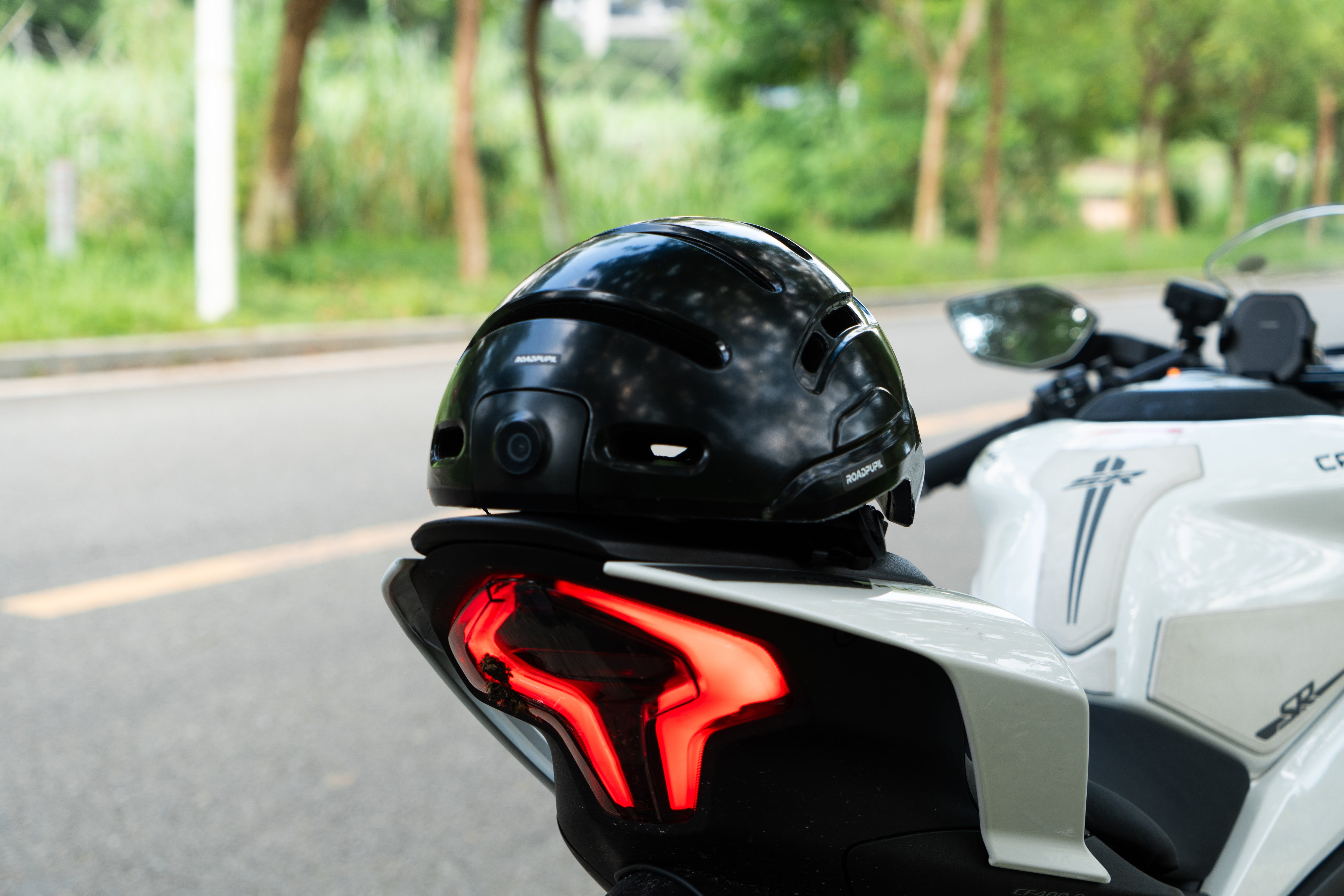
For riders considering more advanced head-mounted options, smart helmet and helmet camera setups come with their own mix of convenience, tech features, and real-world trade-offs.
Is a 360 Camera for Motorcycle More Waterproof Than Traditional Dash Cams?
A 360 camera for motorcycle riding has one big advantage: fewer external components. Many systems use a single sealed unit, reducing exposed connectors and potential leak points.
This can improve waterproof reliability, especially for riders who want full coverage without installing separate front and rear units. The trade-off is lens exposure—placement matters more, and debris protection becomes critical.
Some riders combine a traditional motorcycle dash cam with a compact 360 unit for redundancy and full-scene coverage.

What to Look for When Choosing the Best Camera for Motorcycle Riding
Choosing a waterproof dash cam for motorcycle use isn’t just about specs on paper — it’s about whether the system still works after hours in real rain.
Key features to prioritize:
-
Verified IP ratings across the entire system
-
Sealed power connections and reinforced cables
-
Stable mounts that prevent water pooling
-
Heat management that still works when fully sealed
Riders who commute daily or tour long distances often find that motorcycle-specific systems last significantly longer than adapted action cameras.
Why Purpose-Built Motorcycle Cameras Outperform Generic Options
A true camera for motorcycle riding is engineered for constant exposure—vibration, weather shifts, and long hours on the road.
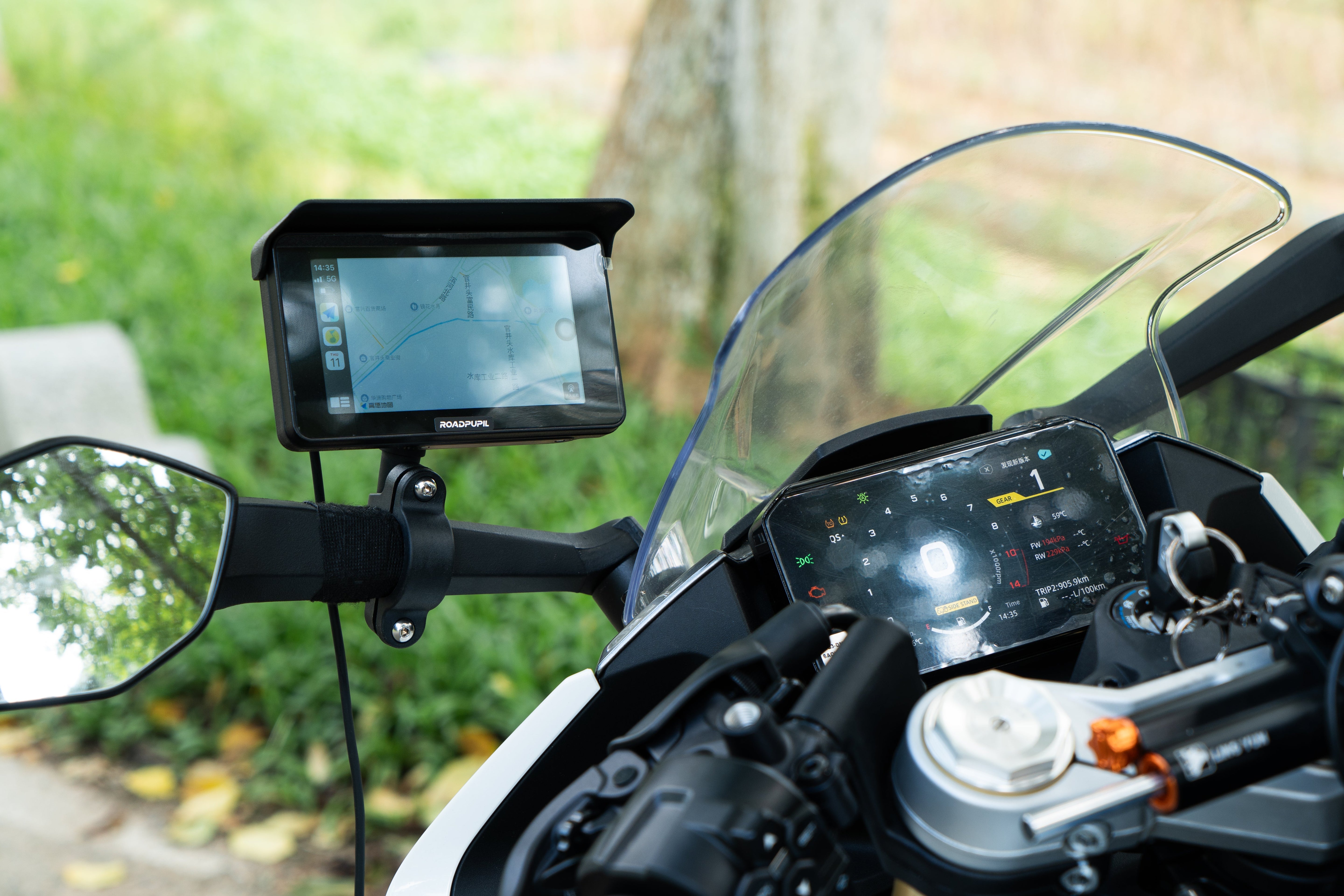
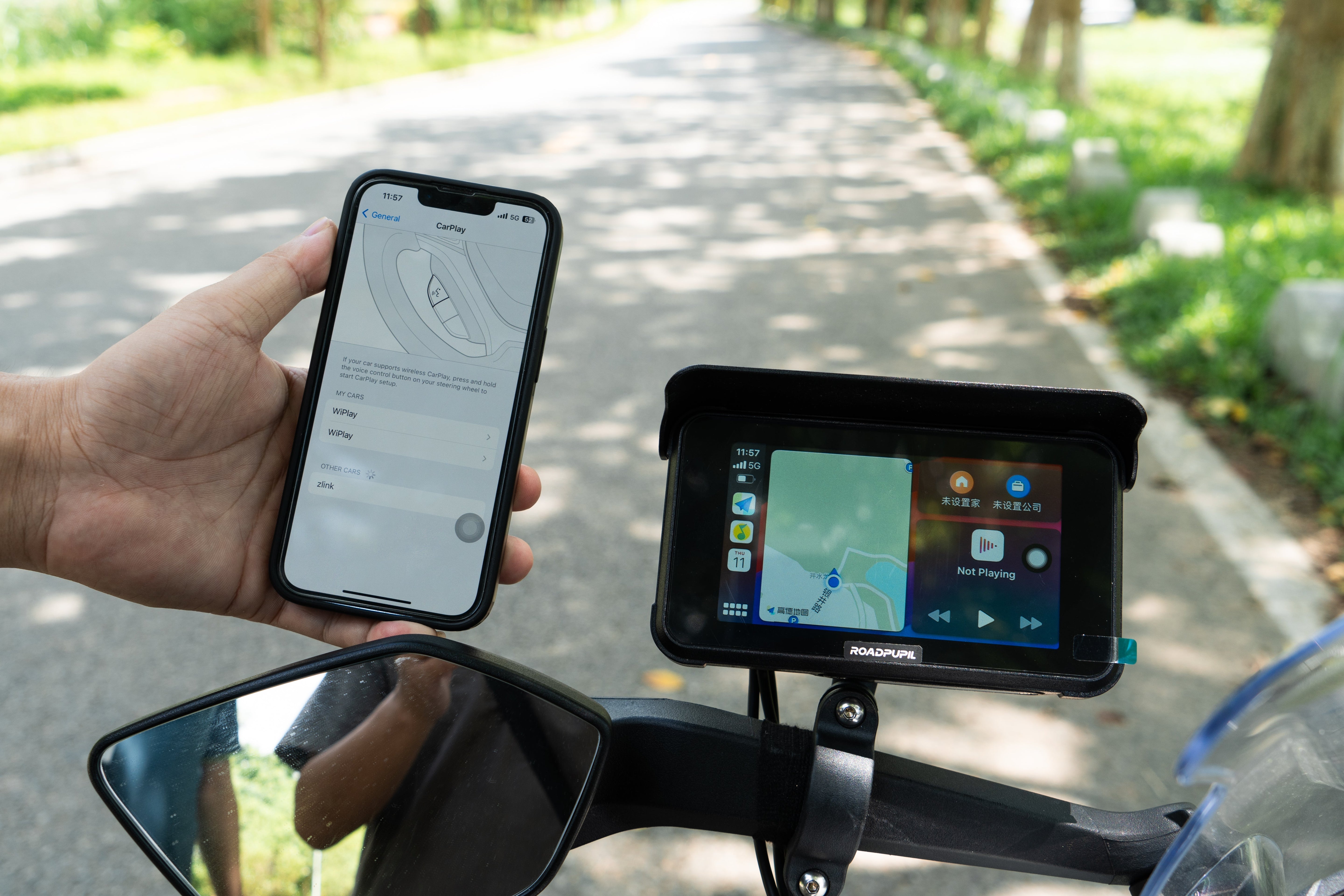
Brands like RoadPupil focus on motorcycle-grade wiring, waterproof housings, and stable mounting as a complete system. Instead of adapting car or action cameras, purpose-built solutions reduce failure points and simplify installation.
Riders who switch often report fewer interruptions, clearer footage in rain, and better reliability on long tours or unpredictable rides.
That’s why many riders eventually gravitate toward motorcycle camera systems designed for riders—not because of flashy features, but because they simply keep working when conditions get unpredictable.

Final Thoughts: Are Motorcycle Dash Cams Waterproof Enough for Real Riding?
So, are motorcycle dash cams waterproof enough?
The honest answer: only if they’re designed for real riding.
A well-built camera for motorcycle use can handle rain, road spray, and long-term exposure without issue. Poorly sealed options may fail quietly—right when you need them most.
Focus on waterproof ratings, installation quality, and purpose-built design, and you’ll end up with a setup that delivers confidence on every ride, rain or shine.
Final tip? Don’t trust the label alone.
A camera might say “waterproof,” but real riding will always test that claim — rain, vibration, and time will expose any weak point sooner or later.
If you’re building a setup that you can rely on in all conditions, it’s worth taking a closer look at purpose-built waterproof dash cams for motorcycles that are designed specifically for riding, not adapted from other use cases.
Ride safe — and make sure your camera keeps rolling when it actually matters.
If you ride in mixed conditions often, having a system you don’t need to think about in the rain makes a bigger difference than most riders expect.
FAQs: Are Motorcycle Dash Cams Really Waterproof?
⬤ Q: Are motorcycle dash cams actually waterproof?
A: Not always. While many products claim to be waterproof, most motorcycle dash cams are only partially sealed. In real riding conditions, water can still enter through cables, mounts, or connectors if the system isn’t designed as a fully sealed unit.
⬤ Q: What makes a waterproof dash cam for motorcycle use reliable?
A: A reliable waterproof dash cam for motorcycle riding goes beyond IP ratings. It should have sealed wiring, protected connectors, and a mounting design that prevents water from pooling or entering weak points over time.
⬤ Q: Do I need a different camera for dirt biking or off-road riding?
A: In many cases, yes. Off-road riding exposes cameras to mud, pressure spray, and constant vibration. That’s why riders often look for waterproof cameras for dirt biking that are built to handle harsher conditions than typical street setups.
⬤ Q: Can helmet cameras replace a motorcycle dash cam in the rain?
A: Helmet cameras can handle rain fairly well, but they’re not always ideal as your main system. Battery life, lens exposure, and unstable footage make them better as a backup rather than a full replacement for a dedicated motorcycle dash cam.
Get in Touch!
Questions? Want to order or check out more gear? Hit us up:
📧 hello@roadpupil.com
📱 Instagram: @roadpupil
🛒 Explore more at Shop: roadpupil.com
Keep Riding Smarter

Written by roadpupil